
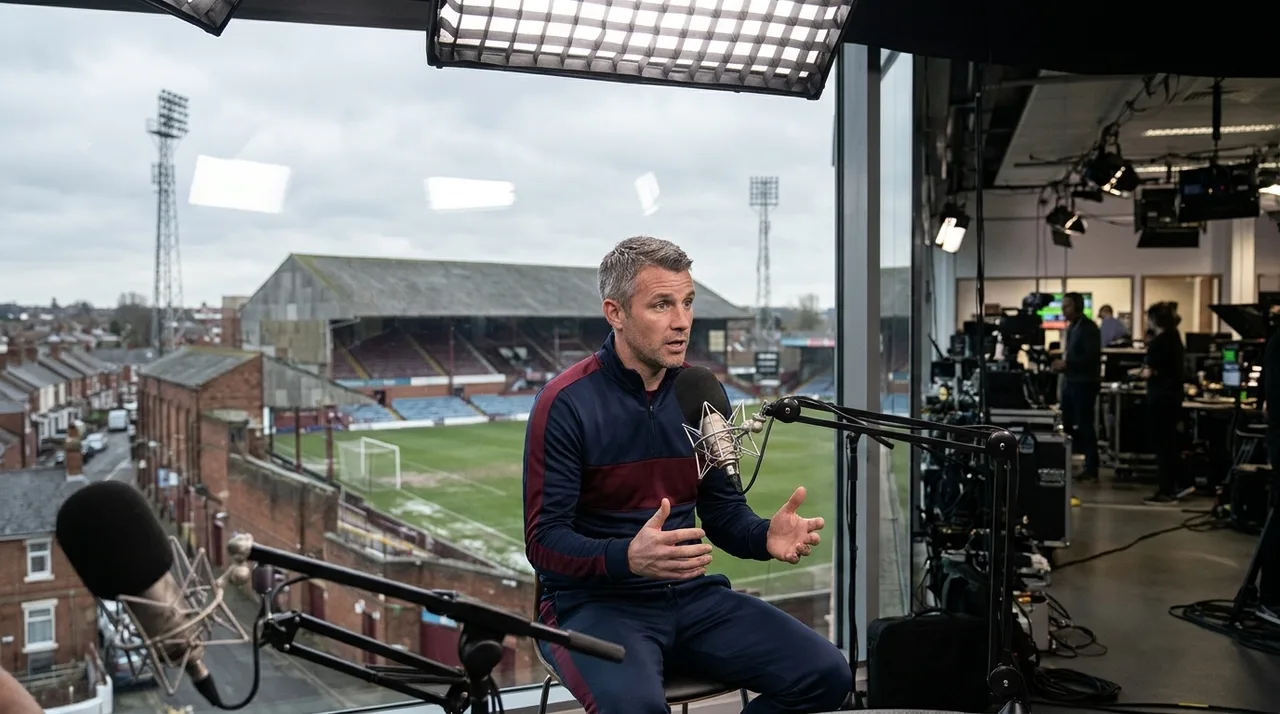
Billy Sharp, the man who scored more goals in the EFL than anyone of his generation, has retired from professional football after a 22-year career. The Sheffield United legend spoke about his decision on the BBC's EFL 72+ Podcast, explaining how he knew the time had come to hang up his boots.
A career built in the second tier and below
Sharp's record as an EFL scorer is the kind that gets described in press releases as "remarkable" and, in this case, the language is fair. Across stints at clubs throughout the Football League, the striker amassed a tally that defined what it means to be a consistent, durable forward at this level. Sheffield United were where he was most closely associated, and where his goalscoring became genuinely legendary among supporters of the Bramall Lane club.
In conversation with hosts Aaron Paul and Jobi McAnuff, alongside fellow guest Lyle Taylor, Sharp reflected on what made him so effective at Championship and League One level. He credited a combination of movement, positioning and, perhaps most importantly, a refusal to chase a move that did not suit him. Sharp was, by his own account, a footballer who understood his division and thrived within it rather than constantly looking upward.
His retirement draws a line under a story that belonged almost entirely to the EFL. For Sheffield United supporters, who have followed the club through several promotions, relegations and the full emotional range the second tier offers, Sharp represents a connection to the division's particular culture: the grind, the consistency, the grounds visited on wet Tuesday nights in January.
Burnley's home form: a year without a league win at Turf Moor
The podcast also turned its attention to Burnley, whose situation at Turf Moor has become one of the more alarming stories in the Championship this season. The club have now gone a full year without winning a home league match, a statistic that would have seemed implausible not so long ago for a club with Burnley's fanbase and infrastructure.
The question being asked, on the podcast and in the stands, is how real the threat of a second consecutive relegation has become. Burnley dropped out of the Premier League and arrived in the Championship with parachute payments providing a financial cushion that most clubs in this division would regard with considerable envy. And yet the results, particularly at home, have not followed.
The managerial situation has been turbulent. Vince Hayen was sacked after just 14 games, and the subsequent search for a replacement has been conducted under public scrutiny. A 4-1 home defeat to Lincoln City, reported here recently, underlined the scale of the problem. Supporters have made clear, through fan forums and social media, that they want an experienced appointment rather than another project.
What is harder to pin down is the root cause of the home form specifically. Turf Moor has a capacity of around 21,000 and, under normal circumstances, provides the kind of atmosphere that should represent an advantage. That it has instead become a place where points are haemorrhaged points to something structural, whether in the squad's confidence, the tactical approach or the club's ability to recruit effectively following relegation.
The podcast guests discussed where it is going wrong without, by the nature of the medium, arriving at a definitive answer. That is perhaps fitting. Burnley's problems do not appear to have a single, obvious cause, which makes them harder to solve.
A broader picture for the division
The episode also touched on the difficulties at Derby County and Norwich City, and on a managerial change in League Two involving Colin Kazim-Richards at Crawley Town. For Championship followers, though, the two threads that matter most are the retirement of one of the division's great goalscorers and the ongoing uncertainty at a club that, on paper at least, ought to be among the automatic promotion candidates rather than looking anxiously over their shoulder.
Both stories, in their different ways, are characteristic of a division that rarely runs to script.
Frequently asked
- How many goals did Billy Sharp score in the EFL?
- Billy Sharp is widely regarded as the EFL's all-time leading scorer across the Football League's lower divisions, amassing his tally over a 22-year professional career, the bulk of it spent at Sheffield United and other Championship and League One clubs.
- When did Burnley last win a home league match?
- According to reports from October 2026, Burnley have not won a home league match for an entire year, making their situation at Turf Moor one of the most concerning form records in the Championship.
- Are Burnley in danger of a second successive relegation?
- It is a genuine concern being discussed widely. After dropping from the Premier League, Burnley's poor home form and managerial instability have raised questions about whether they could face back-to-back relegations, though the season still has many games remaining.