
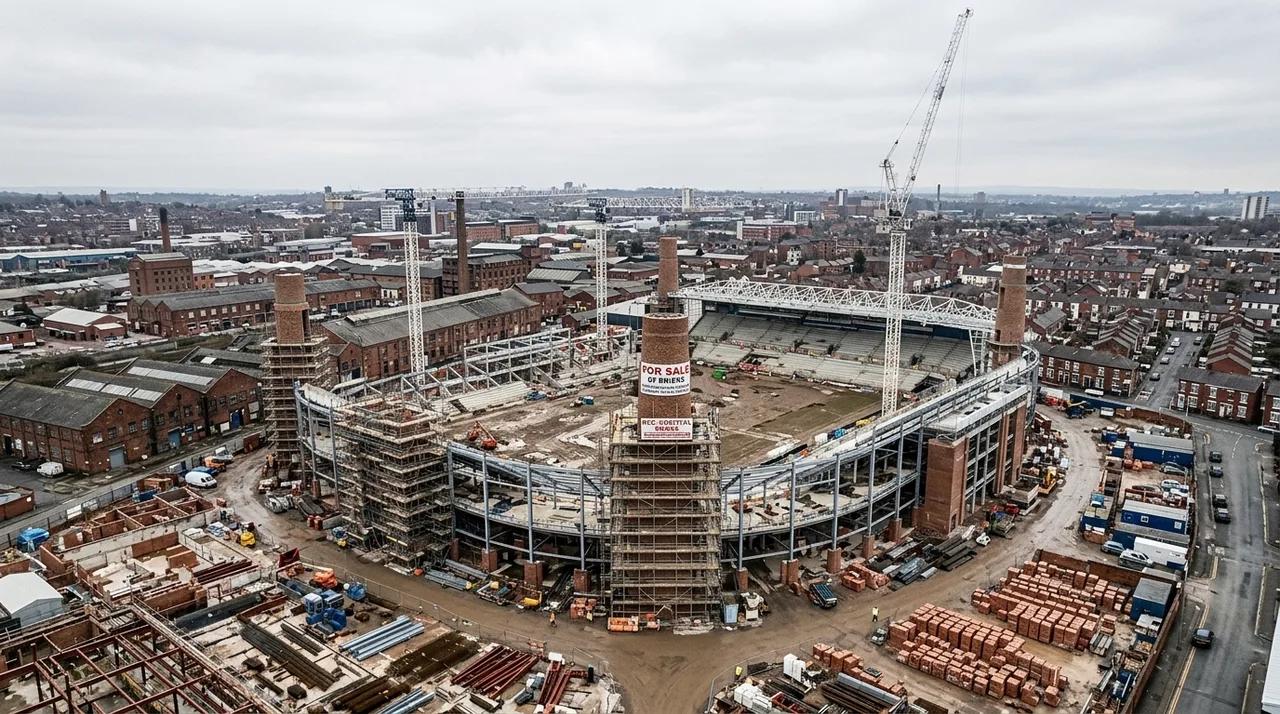
Birmingham City Football Club have purchased one million salvaged bricks from the former City Hospital, to be used in the construction of the twelve chimney-style towers planned for their new Powerhouse stadium. The announcement adds a layer of civic symbolism to a project that the club has been keen to position as a regeneration story rather than simply a new ground.
Where the bricks come from
City Hospital in Birmingham opened in the late 19th century, built using bricks fired at Adderley Park Brickworks. It operated under the NHS from 1948 until its closure in 2024, after more than 130 years of continuous service. During decommissioning, specialists removed, cleaned and sorted the bricks, which were then placed in storage. The club says the new stadium will return them to the approximate area where they were first produced.
The hospital was originally known as the Birmingham Workhouse Infirmary, later renamed Dudley Road Hospital in 1912 before eventually becoming City Hospital. Hundreds of thousands of Birmingham residents will have had some connection to the site over those 130-plus years, which is presumably why the club is leading with the bricks in its communications rather than, say, seat-licensing arrangements or naming-rights talks. That is press-release language, of course, but the underlying fact, that the material is genuinely salvaged and historically traceable, is verifiable.
The stadium plan
Birmingham City unveiled proposals for the 62,000-capacity Powerhouse stadium in November 2025. The venue will sit within a planned Sports Quarter in the city, designed to host sporting and entertainment events beyond matchdays. The twelve towers are described by developers as a deliberate reference to Birmingham's industrial heritage, and the use of Victorian-era brickwork fits that brief.
The club says a record of how the bricks were manufactured, stored and transported will be documented and displayed as part of the wider development. Whether that translates into a permanent interpretive exhibit or a laminated panel near the car park remains to be seen, but the commitment is on the record.
What it means for the club
Birmingham City are a Championship club still working through significant on and off-pitch reconstruction. A 62,000-capacity ground would represent a dramatic step up from St Andrew's, and the symbolic weight of incorporating material from a hospital that served the city for over a century is not nothing. A new stadium of that scale changes a club's finances, its matchday revenues and its profile within the division and beyond it.
No completion date for the Powerhouse stadium is confirmed in the available information, and stadium projects of this scale routinely face planning, funding and logistical delays. The brick purchase, however, signals that at least some tangible procurement is under way, beyond architectural renders and announcements. For supporters who have heard plenty of the latter, that distinction matters.
The wider Sports Quarter development is also intended to include a nature site, according to earlier reports, suggesting the scheme is being designed with planning considerations in mind from the outset. That, too, is language that tends to appear when developers are conscious of a lengthy approval process ahead.
For now, a million bricks sit cleaned, catalogued and waiting. Birmingham City say they mark "a new phase for materials that have been present through more than a century of change in Birmingham." Whether the Powerhouse stadium ultimately delivers on that framing will depend on decisions well beyond the salvage yard.
Frequently asked
- Where will Birmingham City's new Powerhouse stadium be built?
- The Powerhouse stadium is planned for Birmingham's new Sports Quarter. The 62,000-capacity ground will replace St Andrew's as the club's home, though no confirmed completion date has been announced.
- Why are hospital bricks being used in the Birmingham City stadium?
- Birmingham City have purchased one million restored bricks from the former City Hospital, which closed in 2024. The bricks were originally fired at Adderley Park Brickworks near the stadium site, and the club says their reuse preserves a link between the city's industrial past and its current regeneration.
- How big will Birmingham City's new stadium be?
- Plans unveiled in November 2025 show a 62,000-capacity venue, which would make it significantly larger than the club's current ground at St Andrew's.