
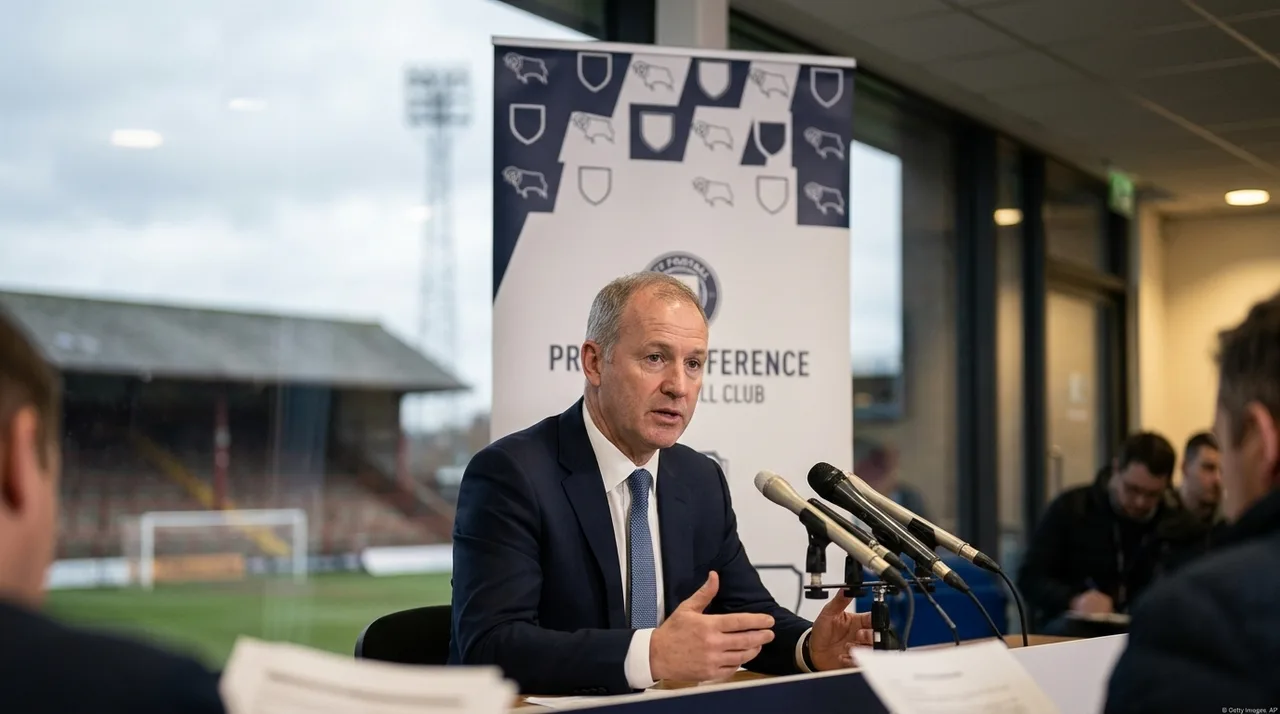
Derby County chief executive Stephen Pearce has given one of the most candid interviews by a senior club official this season, sitting down with BBC Radio Derby's Dominic Dietrich for a wide-ranging conversation that took in the summer transfer window, the club's current financial position and the collapsed takeover that left the Championship side navigating a deeply uncertain period.
A window shaped by the balance sheet
Pearce was candid about the degree to which Derby's activity in the transfer market this summer was dictated by what the club could actually afford rather than by any footballing wish-list. That will surprise nobody who has followed the Rams closely over the past few seasons, but hearing a CEO spell it out plainly is less common than it ought to be.
The club's recruitment since the window opened has been characterised by free transfers and loan arrangements. Goalkeeper Marin Bilokapic arrived on a free, Danish forward Oliver Meister joined on loan from Pisa, and a bid was lodged for Hamza Choudhury. Each move fits a pattern: minimise outlay, maximise flexibility. Pearce did not dress that up as a grand strategy; he presented it as a financial reality.
In a division where parachute payments can gift recently relegated clubs a wage advantage of tens of millions of pounds over their rivals, clubs like Derby, who are operating without that cushion, face structural constraints that no amount of good scouting fully compensates for. Pearce acknowledged those pressures without reaching for excuses.
The takeover that never was
The interview also returned to territory this site has covered before: the collapsed takeover that Pearce has previously described as leaving the club adrift. He elaborated on the timeline and the impact, though the core facts remain as they were. A prospective deal fell through, the club was left in a position of uncertainty during a period when stability was badly needed, and the current ownership has had to pick up the pieces.
What the extended BBC Sounds conversation adds is texture. Pearce spoke about the internal toll of a drawn-out process that ultimately came to nothing, and about the difficulty of planning a squad, a budget and a football structure when fundamental questions about who actually owns the club have not been resolved. For supporters who have lived through Derby's turbulent recent history, none of this will feel abstract.
Finances: the numbers behind the press-release language
Pearce stopped short of publishing a full set of figures in a radio interview, as one might expect, but he touched on wage costs, the club's ongoing efforts to operate within sustainable limits and the relationship between revenue and spending. Derby play their home fixtures at Pride Park Stadium, a ground with a capacity that can generate meaningful matchday income when attendances hold up, and Pearce pointed to that as part of the club's commercial foundation.
The broader picture at Pride Park is of a club that spent years living well beyond its means under previous ownership, entered administration, was deducted points, and is now trying to rebuild something resembling a normal football operation. That is not a quick process. Pearce did not suggest it was.
What it means on the pitch
Head coach Paul Heckingbottom has been working within the constraints Pearce described. A draw at Cardiff and a win at Portsmouth suggest the squad, however assembled, is competitive in the Championship this season, even if the margin for error is thin. With the transfer window now closed, the focus shifts entirely to results.
The conversation with Pearce is worth 41 minutes of any Derby supporter's time, not because it contains dramatic revelations, but because it treats supporters as people who deserve a straight account of where their club actually stands. That is rarer than it should be.
Frequently asked
- What did Derby County CEO Stephen Pearce say about the club's finances?
- Pearce confirmed that Derby's transfer activity has been heavily shaped by financial constraints, with the club relying on free transfers and loan deals. He spoke openly about the difficulty of operating without parachute payments and the legacy of spending under previous ownership.
- What happened to the Derby County takeover?
- A prospective takeover of Derby County collapsed without completing, leaving the club in a period of significant uncertainty. Pearce has described the failed deal as having left the club adrift at a critical time, and he elaborated on its impact in his BBC Radio Derby interview.
- How did Derby County's summer transfer window go?
- Derby focused on low-cost recruitment, bringing in goalkeeper Marin Bilokapic on a free transfer and Danish forward Oliver Meister on loan from Pisa, among others. CEO Stephen Pearce acknowledged the window was shaped by what the club could afford rather than an open-ended wish-list.