
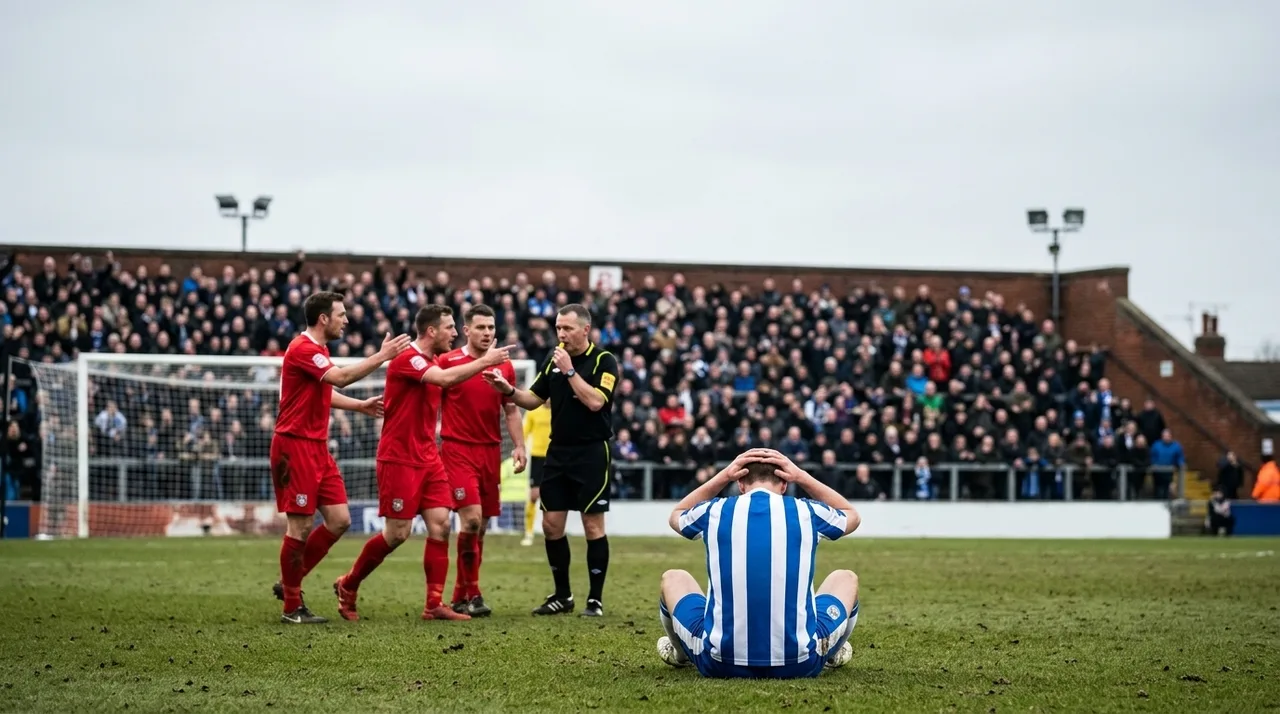
Aune Heggebo jumped for a cross in the 75th minute at Carrow Road, the ball clipped his hand and flew into the net. Referee Tim Robinson gave the goal. West Brom won 2-1. Four days later, Heggebo became the first player in English football to be banned under the Football Association's "successfully deceiving a match official" charge, and the second tier found itself at the centre of a debate it cannot easily resolve.
How the ban came about
The FA charged Heggebo with misconduct under Rule E3.1 on the Tuesday following West Brom's opening-day victory over Norwich City. The governing body's position is that retrospective action is reserved for cases where there is overwhelming evidence of intentional deception; the panel concluded that standard was met here.
West Brom pushed back hard. The club argued that the ball deflected off goalkeeper Vladan Kovacevic before it reached Heggebo's hand, leaving him less than 0.1 of a second to react. On that timeline, the Baggies said, no deliberate act was possible. The panel disagreed, and on Thursday a two-match ban was confirmed.
The club has since announced it will write to the FA requesting clarification on how a player is reasonably expected to behave in comparable circumstances. The question is a genuine one: if contact is unintentional, should a player volunteer it to a referee who has already awarded the goal?
A rule with almost no prior use
The deception charge has existed since 2017-18 but, according to West Brom, this is the first time it has been applied following the rule's revision two years ago. Previous retrospective action tended to target simulation rather than handball incidents. The lack of precedent means the FA offered little explanation of its reasoning beyond confirming the ban, leaving the club and observers to fill in the gaps themselves.
West Brom released a statement defending Heggebo's integrity. "We remain steadfast in our support of Aune, whose character and integrity have been evident throughout his time at The Hawthorns," it read. Supporters speaking to BBC WM echoed the sentiment, arguing the club could not be expected to self-report a handball that the officials had already cleared.
Former striker Chris Sutton took a different view, suggesting the outcome would make players think twice in future. That tension, between competitive instinct and the spirit of the game, sits at the heart of the controversy.
VAR and the Championship's deliberate choice
The incident has reignited discussion about the absence of video review in the second tier. VAR operates across every top-flight fixture but Championship clubs voted against introducing any version of the system as recently as April, and BBC Sport understands the idea is closed for the foreseeable future.
Had a review system been available, the handball would likely have been caught in real time and no deception charge would have followed. Instead, a disputed goal stood, a ban was issued retrospectively, and a club is left seeking written guidance from the governing body on a question that has no clear answer in the current rulebook.
Heggebo, who joined West Brom from Norwegian club SK Brann in the summer of 2025, will sit out Sunday's home fixture against Burnley (12:00 BST kick-off). His second suspension game falls midweek in the Carabao Cup, a match outside the Championship, but his absence on Sunday will be felt in the league. The Baggies used the summer to strengthen their forward line and will need others to carry that threat at The Hawthorns while the ban runs its course.
What happens next
The Heggebo case sets a marker, however slender. English football now has its first confirmed ban for deception following a handball goal, issued without VAR and without a clear published framework for how such decisions will be made in future. West Brom's letter to the FA may prompt that framework to be written. Until it is, players, managers and clubs in the Championship have only this single case as a guide.
Frequently asked
- How many games is Aune Heggebo banned for?
- Heggebo was banned for two matches after being found guilty of deceiving a match official following his handball goal against Norwich City on the opening day of the Championship season.
- Why did West Brom say the handball was not deliberate?
- West Brom argued the ball deflected off goalkeeper Vladan Kovacevic before reaching Heggebo's hand, giving the striker less than 0.1 of a second to react, making intentional deception impossible.
- Why is there no VAR in the Championship to review incidents like this?
- Championship clubs voted against introducing any form of VAR as recently as April 2026. BBC Sport understands the idea is now closed for the foreseeable future, meaning disputed incidents cannot be reviewed in real time.