
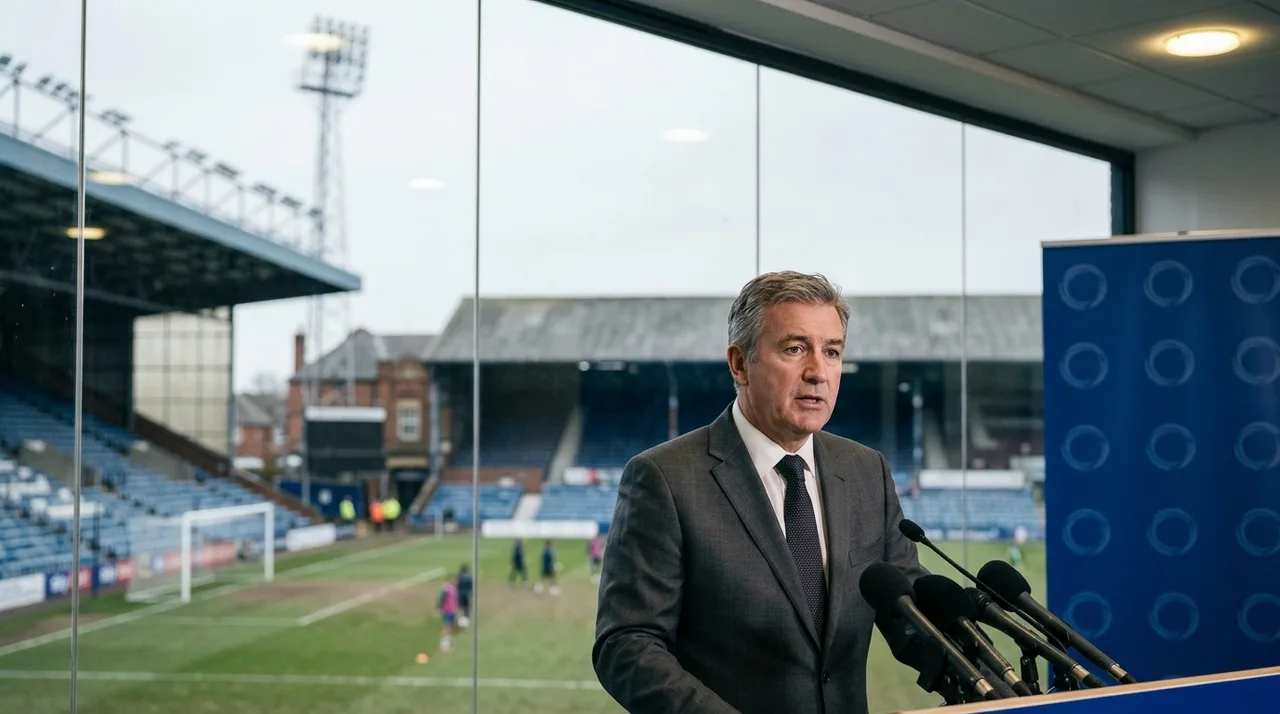
Queens Park Rangers chief executive Nourry sat down with BBC Radio London's Phil Parry on 2 September for a wide-ranging interview, offering supporters a direct line to the club's senior leadership at what remains a demanding time for the west London side in the Championship.
The headline quote, that "everyone will do the absolute to do the best," has the ring of press-release language, but it is worth noting the context in which it was delivered: a public-facing radio interview rather than a polished written statement. That format tends to produce more candid exchanges, and Parry is not a journalist known for softening his questions.
What does the CEO's message mean in practice?
QPR have had a turbulent few years by any measure. Parachute payments that once cushioned the club after Premier League relegation have long since wound down, and the financial constraints that follow a prolonged Championship stay are well documented in the club's published accounts. Wage-bill discipline, recruitment strategy and the day-to-day running of a ground like Loftus Road all fall ultimately under the chief executive's remit.
Nourry taking to BBC Radio London is in itself a signal of intent. Chief executives at Championship clubs rarely seek out broadcast interviews unless there is a message they want the fanbase to hear directly. Whether that message is about squad investment, stadium matters, ownership direction or simply morale, the commitment framing suggests the club is keen to demonstrate unity of purpose at board level.
The bigger picture at Loftus Road
QPR sit in the Championship at a club that carries the weight of a passionate local support and a fanbase that has been asked to be patient across several successive seasons without a serious promotion challenge. The W12 faithful are accustomed to hearing encouraging words from the boardroom; what they are looking for is evidence in results, recruitment and, ultimately, in the league table.
Championship clubs operate in a division where the financial gap between success and stagnation can be brutally swift. A play-off place generates revenue and transfer leverage; another mid-table finish does not. The cost of getting it wrong is not merely a poor season, it is a structural disadvantage that compounds year on year.
In that context, a CEO speaking publicly about collective commitment carries a practical dimension beyond motivation. It signals to supporters, to players in contract discussions, and to potential signings that the direction of the club is settled. Whether the actions that follow match the rhetoric is, as always, the question that only time will answer.
What supporters will be watching
Rangers fans will be looking at the squad depth available to the manager as the season unfolds, the club's approach to the January transfer window if results demand reinforcement, and any developments on longer-term matters such as ground improvements or ownership structure. A 22-minute radio interview cannot address all of those things in full, but it does at least indicate a willingness to engage with supporters through the media rather than defaulting entirely to club-channel communications.
The full interview with Phil Parry is available on BBC Sounds and runs to approximately 22 minutes. For QPR supporters wanting to hear the CEO's thinking in his own words rather than filtered through a summary, it is worth the time.
Frequently asked
- Who is the CEO of Queens Park Rangers?
- QPR's chief executive is Nourry, who spoke publicly about the club's direction in an interview with BBC Radio London's Phil Parry in September 2026.
- Where can I listen to the QPR CEO interview?
- The interview is available on BBC Sounds as part of BBC Radio London's output. It runs to approximately 22 minutes.
- What division are Queens Park Rangers in?
- Queens Park Rangers are competing in the Championship, English football's second tier.