
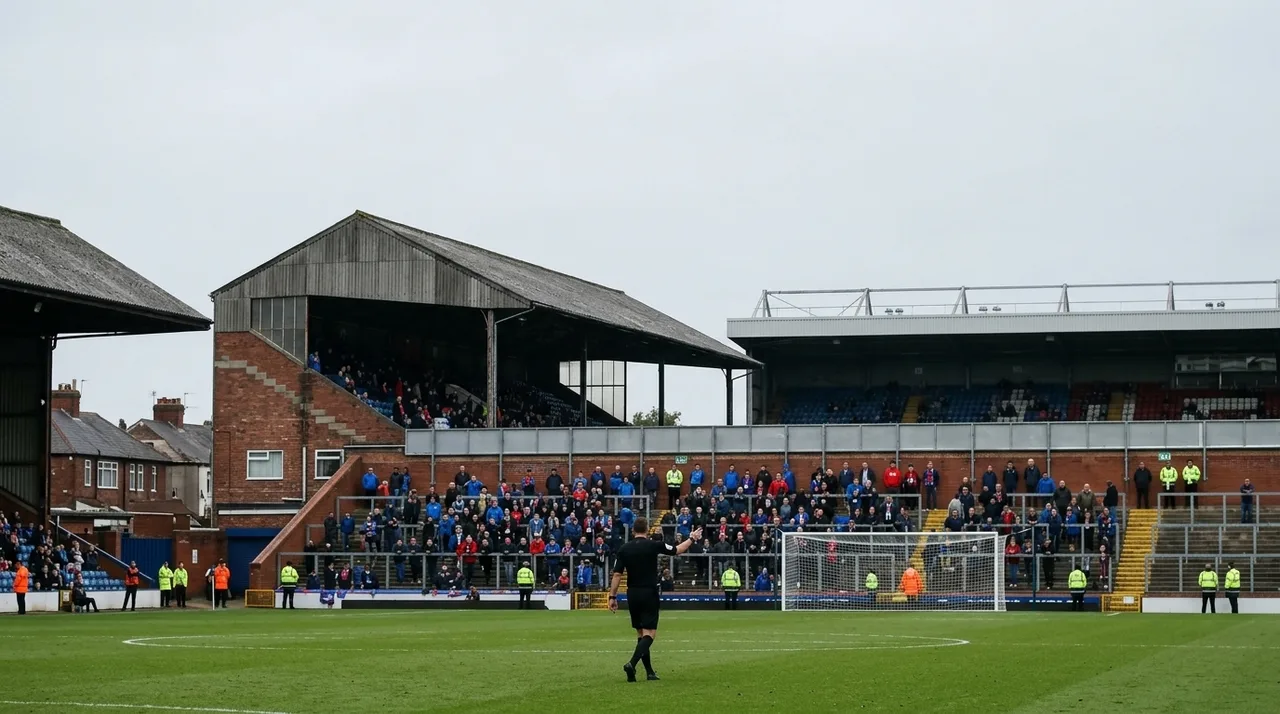
Sheffield United are facing the prospect of a 12-point deduction after the High Court placed the company used to purchase the club into liquidation on Wednesday, in a development that will be watched closely across the Championship.
What happened in court
COH Sports Bidco Limited (CSBL) agreed to buy Sheffield United for just over £100m in December 2024. Around £35m of that purchase price remained outstanding, and last month the club's former owners, United World, filed a winding-up petition against CSBL to recover the debt. The hearing at the High Court lasted approximately ten seconds. CSBL had no legal representation present.
A statement from the former owners said they had made "every effort to resolve this matter amicably" but had "received no response". Sheffield United's own statement described the matter as "between the current owners and former owner" and insisted that "day-to-day operations at Sheffield United are unaffected".
That is the press-release version of events. The regulatory picture is considerably more complicated.
Why this is not straightforward for the EFL
When a football club itself enters administration, the EFL's rules impose an automatic points deduction. Wednesday's ruling was against CSBL, a separate company rather than the club itself, so no automatic punishment is triggered. The EFL confirmed it would consider the implications of CSBL's liquidation, including "whether any further action is required".
The complication runs deeper than that. In June, the shares in Sheffield United were transferred from CSBL into a new US-based company, 1919 Partners LLC, which became the parent company of the club. Timothy Ryan was added to the board at the same time. In effect, CSBL was stripped of any operational role before the winding-up petition came to court.
BBC Sport reports that neither the EFL nor the newly established Independent Football Regulator (IFR) had been told in advance that the share transfer was taking place or that Ryan had been appointed. Both bodies are now examining the situation. The IFR said it was "examining the court's decision on COH Sport in detail" and could, under its Owners, Directors and Senior Executives regime, assess an incumbent owner's "honesty, integrity and financial soundness" if it had grounds for concern.
The 12-point question
The EFL's regulations give its board discretion when a "group undertaking" rather than the club itself suffers an insolvency event. The board is directed to consider factors including "the need to protect the integrity and continuity of the competition" and "the reputation of the league". A 12-point deduction is the sanction available for an insolvency event, and the precedent for parent-company insolvencies does exist: Southampton were docked 10 points in 2009 after their parent company collapsed.
The central question is whether the EFL views the transfer of shares into 1919 Partners LLC as a legitimate restructuring or as a mechanism that left a sizeable purchase debt in a company that was then allowed to be wound up. If the latter reading prevails, the EFL board could act accordingly.
Sheffield United are not strangers to points penalties. They were deducted two points during the 2024-25 season for missed transfer payments that pre-dated CSBL's ownership, stemming from obligations incurred under the previous regime of United World and Prince Abdullah bin Mosaad Al Saud, who sold the club after a prolonged and well-documented period of ownership.
What this means for Birmingham and the rest of the Championship
The timing is significant. Sheffield United opened their Championship campaign with a goalless draw at home to Birmingham City. A 12-point deduction, if it were to materialise, would be severe at any stage of the season but would be particularly brutal this early. It would immediately place the club in a fight against relegation regardless of what they produce on the pitch.
For Birmingham City and every other side in the division, a potential deduction of that magnitude alters the landscape of the promotion race and the relegation battle in one move. The EFL has given no indication of a timetable for its deliberations, and the legal and regulatory threads here, involving the EFL, the IFR, two sets of former and current owners, and at least two separate corporate entities, are unlikely to unravel quickly.
What is clear is that the £35m debt is not disputed. How the football authorities respond to the manner in which it was left behind will define what happens next.
Frequently asked
- Could Sheffield United really be deducted 12 points?
- Yes, it is a genuine possibility. The EFL has the power to impose a 12-point deduction when a group undertaking connected to a club suffers an insolvency event, even if the club itself has not entered administration. The EFL board must weigh factors including the integrity of the competition before making any decision.
- Why was the company that bought Sheffield United wound up?
- COH Sports Bidco Limited (CSBL) agreed to purchase Sheffield United for just over £100m in December 2024 but left around £35m of the purchase price unpaid. The club's former owners, United World, filed a winding-up petition to recover the debt, and the High Court granted it in a hearing that lasted roughly ten seconds, with CSBL unrepresented.
- How does this affect Birmingham City?
- Birmingham opened their Championship season with a goalless draw at Sheffield United. If the EFL were to impose a heavy points deduction on Sheffield United, it would reshape the relegation picture across the second tier, potentially benefiting clubs like Birmingham City in the standings.