
Football clubs are often described, usually in press-release language, as "communities". What that word actually means is harder to quantify than a points tally or a wage bill, and it tends to emerge most clearly in the moments a club cannot plan for.
Hannah Bellamy's story is one of those moments. Speaking on Radio Lancashire, Hannah remembered her late mum Jen, a Blackburn Rovers supporter, and spoke openly about the support she received from fellow fans in the wake of her loss.
A supporter's bond
The picture Hannah paints of her mum is recognisable to anyone who has stood in a terrace or sat in a lower-league stand for years on end. Jen, by her daughter's account, was the kind of supporter clubs quietly depend on: loyal, uncomplaining, and conspicuously reluctant to turn on the players when results went against them. "She'd never knock the players," Hannah said, capturing in five words a particular type of fan that every club in this division has and rarely thinks to celebrate.
Blackburn Rovers are a Championship club with a complicated recent history, one that supporters have lived through without much say in the matter. Ownership changes, managerial upheaval, seasons spent looking anxiously over a shoulder at the relegation places: the kind of turbulence that tests whether a fanbase holds together or fractures. For many, it holds together precisely because of what Hannah is describing, the informal networks of people who know each other from the turnstile queue, the supporters' bar, the away-end minibus.
Grief and the terraces
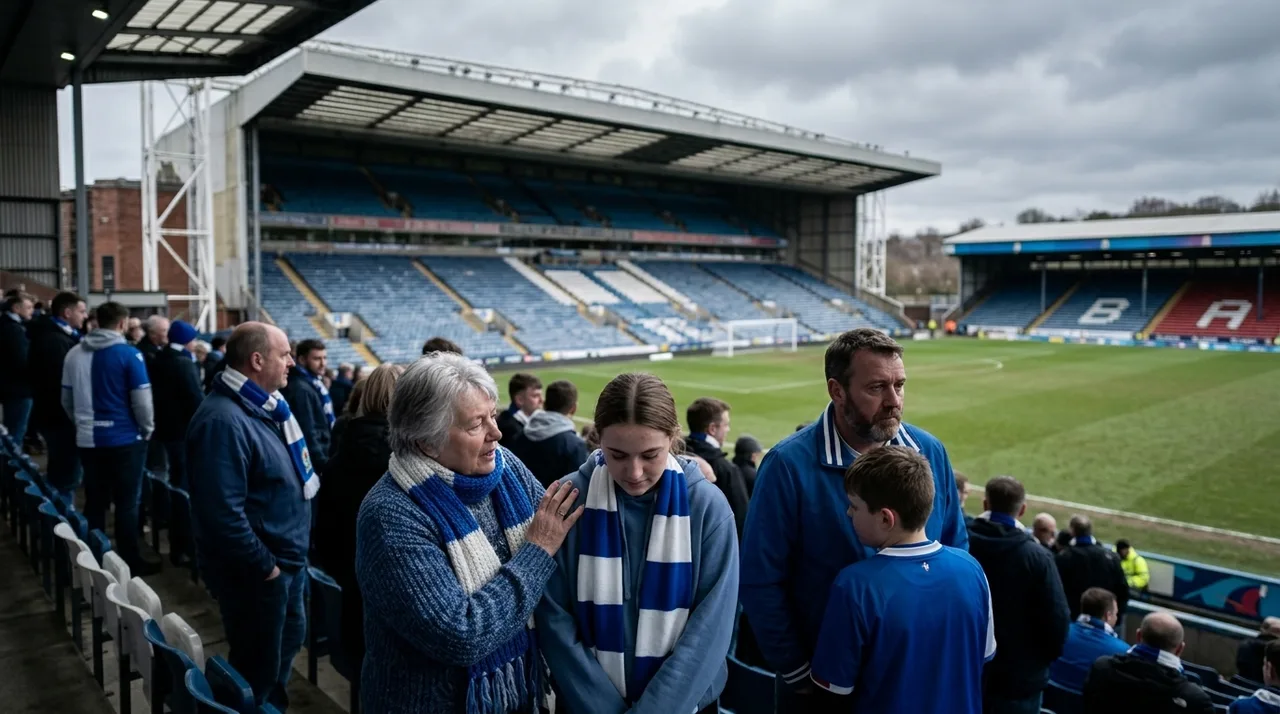
Hannah's account of finding comfort among Rovers fans after losing her mum is not the sort of story that appears in a club's commercial brochure, but it is probably the most honest version of what a football club is. Ewood Park, whatever its ownership structure or its position in the second-tier table, is a place where people accumulate years of shared experience alongside strangers who gradually stop being strangers.
The broader context matters here. Blackburn are a club whose attendances have fluctuated with their fortunes, as is almost always the case in the Championship. The division is long, the schedule is punishing, and the gap between a hopeful August and a grinding March can be considerable. What keeps people coming back, often, is not optimism about the table but something more durable: habit, loyalty, and the kind of social fabric that Hannah is describing.
What supporters carry
There is a tendency in football coverage to treat supporters as consumers: season-ticket holders, shirt buyers, people whose relationship with a club is transactional and therefore measurable. Hannah's story is a reminder that for a great many people, the relationship is nothing of the sort. It is woven into family life, into memory, and into grief.
Jen Bellamy evidently loved Blackburn Rovers without conditions. Her daughter's willingness to talk about that publicly, and about the warmth shown to her by other fans since her mum's death, says something worth noting about what endures at a club even when results, ownership and league position keep shifting.
It will not appear in any financial accounts. It does not show up in expected-goals models or wage-to-turnover ratios. But it is, arguably, the most load-bearing part of any football club in this division: the supporters who keep turning up and, when one of their own is lost, close ranks around the family left behind.
Frequently asked
- Who is Hannah Bellamy and what is her connection to Blackburn Rovers?
- Hannah Bellamy is a Blackburn Rovers supporter who spoke on Radio Lancashire about her late mum Jen, also a Rovers fan, and the support she received from fellow supporters after her mum's death.
- What did Hannah Bellamy say about her mum Jen and the Rovers fanbase?
- Hannah said her mum would never criticise the players, and she spoke warmly about the comfort and solidarity shown to her by other Blackburn Rovers fans following her bereavement.
- Where can I listen to Hannah Bellamy's interview about her mum and Blackburn Rovers?
- The interview is available on BBC Sounds as part of a Radio Lancashire programme, running approximately 11 minutes.