
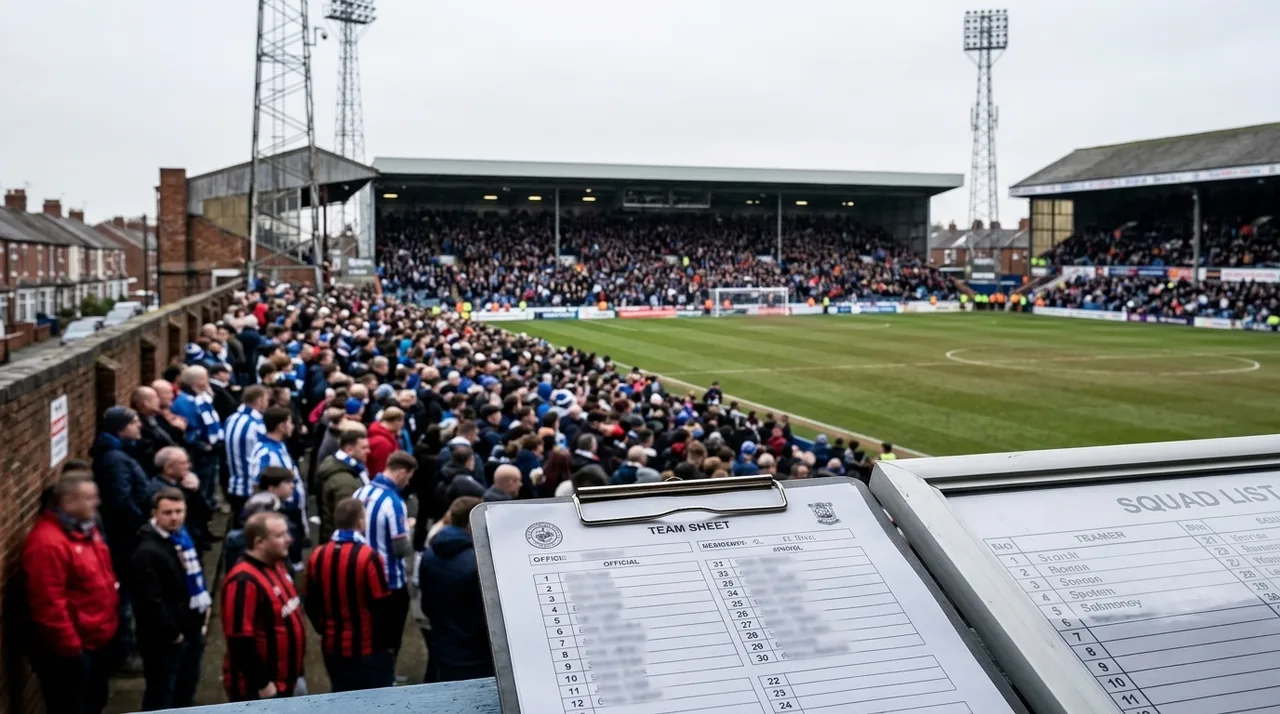
Every Championship club must carry a minimum of eight homegrown players on its registered squad list, and name at least seven of them in a matchday squad for any league fixture. Those are the bare bones of a rule that trips up supporters and occasionally surprises clubs themselves, particularly when the definition of "homegrown" turns out to be considerably broader than simply being English or Welsh.
What "homegrown" actually means
A player qualifies as homegrown if they have been registered with any English or Welsh club for a total of three seasons, or 36 months, before their 21st birthday (or before the end of the season in which they turn 21). The crucial point is that it does not matter what country they represent internationally. The rules say nothing about passport or cap history; they are purely about where a player developed as a youth.
Watford's recent 2-0 win over Charlton Athletic illustrated this neatly. Of the Hornets' matchday squad on that occasion, Mattie Pollock and Marc Bola were the only players listed as English. Yet Hector Kyprianou (who represents Cyprus), Jordan Zemura (Zimbabwe), Daniel Bachmann (Austria), Stephy Mavididi (Democratic Republic of Congo) and Amin Nabizada (Afghanistan) were all counted as homegrown because of where they served their youth apprenticeships in English or Welsh football. A significant proportion of Watford's qualifying contingent, then, would not pull on an England shirt in a lifetime of Tuesdays.
That is not a quirk unique to Watford. Across the Championship, clubs built on international scouting networks routinely meet the homegrown threshold through players who arrived in England as teenagers rather than as finished articles. The rule is designed to protect the development pathway, not to restrict nationality.
The club-developed requirement
Beyond the basic squad registration numbers, there is a secondary obligation. Once a club has submitted its squad list after the summer window closes, it must include at least one club-developed player on its squad list or team sheet for every match. A club-developed player is one who has been on the books of the specific club in question, rather than simply any English or Welsh club, for the required period.
Fail to name one, and the sanction is automatic and immediate: one fewer substitute is permitted for that game. In the Championship, that means eight on the bench rather than nine. It is a modest punishment in isolation, but it creates a tactical inconvenience and, more pointedly, a public record of the failure.
Who is exempt from the squad lists
Under-21 players do not count towards squad lists in any of the three EFL divisions, which gives clubs some flexibility in blooding younger talent without affecting their registered numbers. Goalkeepers are also excluded from squad list calculations in League One and League Two, though not in the Championship, where the full squad list applies to every outfield and goalkeeping position.
Cup competitions are different
The homegrown rules apply strictly to league football. The EFL does not enforce them for the FA Cup, EFL Cup or EFL Trophy, so clubs rotating their squads in those competitions have no obligation to meet the thresholds. The Premier League operates an entirely separate system with its own squad list and homegrown definitions, which do not apply to Championship clubs regardless of their ownership structures or aspirations.
Why it matters in the second tier
The Championship is the division where transfer spending, loan deals and parachute payments create the widest gaps in squad depth. Homegrown rules are one of the few mechanisms that place any kind of structural floor under the number of domestically developed players at each club. Whether that floor is set at the right height is a separate debate, but the rules are there, they are enforced, and as Watford's squad composition shows, meeting them and meeting them with English players are not always the same thing.
Frequently asked
- How many homegrown players do Championship clubs need in their squad?
- Championship clubs must register a minimum of eight homegrown players in their squad and name at least seven of them in the matchday squad for each league game.
- Does a homegrown player have to be English or Welsh?
- No. A homegrown player simply needs to have been registered with any English or Welsh club for three seasons or 36 months before turning 21. Players who represent other countries internationally, such as Austria or Zimbabwe, can still qualify.
- What happens if a Championship club does not include a club-developed player in its squad?
- The club is permitted one fewer substitute for that match, meaning eight players on the bench instead of the usual nine.