
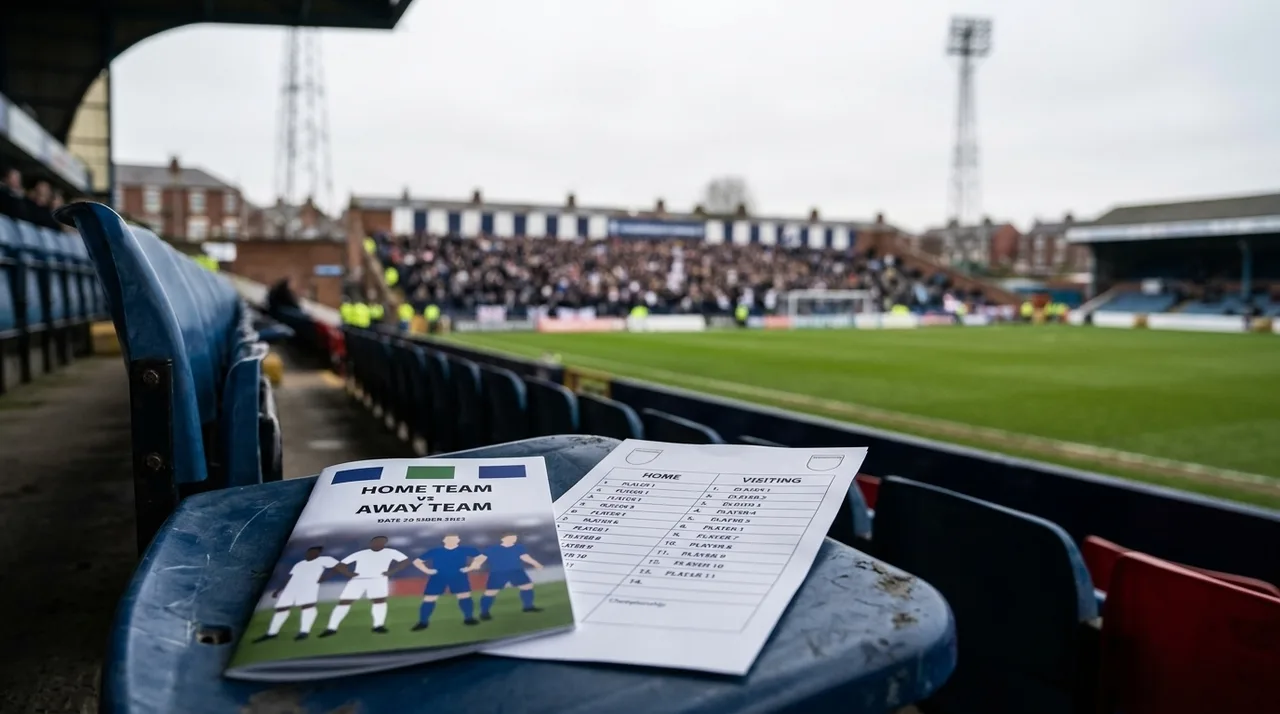
The English Football League's rules on homegrown players are a fixture of every Championship club's squad-planning cycle, yet they are frequently misunderstood by supporters. A recent Watford match has put those rules back under the spotlight, so here is what they actually say and what they mean in practice at the second tier.
The core requirement
Every Championship club must have a minimum of eight homegrown players registered in its squad once the summer transfer window closes. When it comes to matchday, at least seven homegrown players must appear on the team sheet. Clubs that cannot field a club-developed player in a given match are permitted one fewer substitute: nine on the bench becomes eight. For most clubs the sanction is manageable, but across a long season it is the kind of detail that a recruitment department cannot afford to ignore.
What does "homegrown" actually mean?
This is where many supporters are caught out. A homegrown player is not necessarily English or Welsh. The rules define the status by time served in the system, not by passport. Specifically, a player qualifies as homegrown if he was registered with either his current club or any English or Welsh club for three seasons or 36 months before either his 21st birthday or the end of the season in which he turns 21.
Watford's squad illustrates the point clearly. In the Hornets' recent 2-0 win over Charlton Athletic, only defenders Mattie Pollock and Marc Bola were listed as English in the matchday squad. Yet several other players counted as homegrown under the EFL's criteria: Hector Kyprianou (Cyprus international), Jordan Zemura (Zimbabwe), Daniel Bachmann (Austria), Stephy Mavididi (Democratic Republic of Congo) and Amin Nabizada (Afghanistan) all qualified through their time in English or Welsh club academies rather than through international eligibility.
In other words, a player who represents a non-British nation at senior level can still count towards a Championship club's homegrown quota, provided he served his youth apprenticeship on English or Welsh soil.
Under-21s and goalkeepers
Players aged under 21 do not count towards squad lists in any of the three EFL leagues. That exemption is significant for Championship clubs that rely on young loan players or academy graduates to fill out their matchday 25: those names simply do not appear in the homegrown accounting.
Cup competitions are excluded
These rules apply only to league matches. The FA Cup, EFL Cup and EFL Trophy operate under separate arrangements and the EFL does not enforce its homegrown quota for those competitions. Clubs that field an experimental XI in a League Cup tie, for instance, face no penalty under the squad registration rules, whatever the composition of the side.
Why it matters at this level
At Championship level, where wage bills and transfer fees dwarf those in the third and fourth tiers, the homegrown rules shape recruitment decisions in subtle ways. A club signing an overseas player in his mid-twenties who did not come through the English or Welsh system needs to balance that arrival against its quota. Equally, clubs with strong academies, or those that take on plenty of English-trained loan players, find the threshold relatively straightforward to meet.
For supporters watching their clubs navigate a congested second-tier table, the homegrown rules are rarely headline news. But they run quietly beneath every squad announcement and every loan deal, and understanding them helps make sense of some of the less obvious names that appear on a team sheet come three o'clock on a Saturday.
Frequently asked
- How many homegrown players must a Championship club have in its squad?
- EFL rules require Championship clubs to register at least eight homegrown players in their squad and to name at least seven of them in each matchday squad for a league fixture.
- Does a homegrown player have to be English or Welsh?
- No. A player qualifies as homegrown if he was registered with any English or Welsh club for three seasons or 36 months before his 21st birthday, regardless of his international nationality.
- What happens if a Championship club does not include a club-developed player on its team sheet?
- The club is permitted one fewer substitute for that match, reducing the allowed bench from nine players to eight.