
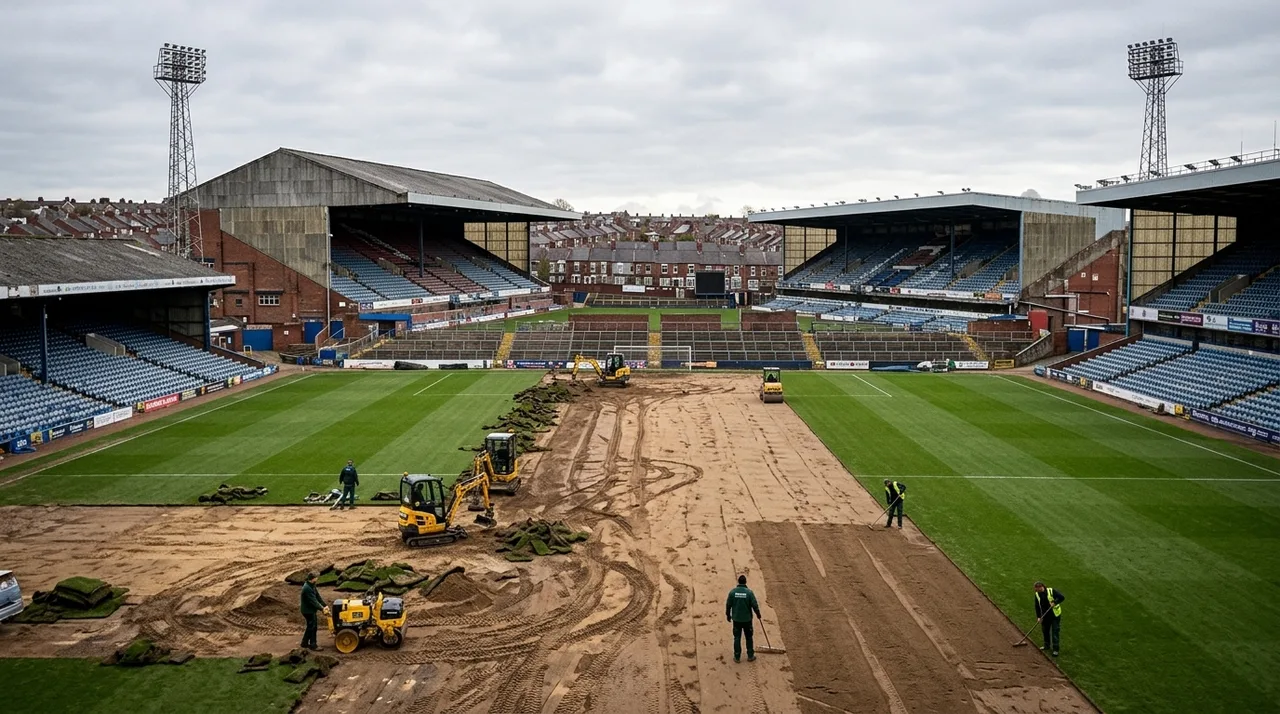
Blackburn Rovers have undergone a significant overhaul of the playing surface and supporting facilities at Ewood Park, with turf specialist James Podesta of STRI describing the project as one that required tackling "a lot of issues" before meaningful improvement could be achieved.
The scale of the problem
Podesta, speaking on BBC Radio Lancashire, was candid about the state of things when STRI first assessed the Ewood Park pitch. The picture he painted was not a flattering one. "There were a lot of issues," he said, a summary that points to problems running deeper than the surface itself, encompassing the underlying infrastructure and broader facilities used by the playing staff.
For a Championship club, the condition of the training and match-day pitch is not a cosmetic concern. A reliable, well-maintained surface directly affects how a manager can set up in training, how quickly injured players return, and how consistently the team can implement a defined style of play across a 46-game season. When the surface is unreliable, coaches adapt training loads to protect players rather than to develop the team, and that compromise accumulates over months.
Why this matters for a Championship club
Blackburn are competing in one of the most physically demanding league structures in European football. The Championship's relentless schedule, with matches typically coming every three or four days at its most congested periods, means recovery and preparation facilities are under constant stress. A pitch that cuts up badly, drains poorly, or causes surface-related injuries is a handicap that shows up in the table eventually, even if the connection is difficult to measure directly.
The investment in bringing in STRI, a respected independent sports turf research body, signals that the club is taking the infrastructure side of its operation seriously. These are not glamorous headlines, and pitch renovations do not generate the excitement of a new signing, but the clubs that tend to sustain promotion pushes are frequently those that have quietly got the fundamentals right off the pitch as well as on it.
It is also worth noting the timing. Addressing structural issues with a playing surface is work that cannot be rushed, and the fact that this project has been undertaken suggests planning over at least one pre-season window. Supporters will hope the worst of the disruption is already behind the club rather than ahead of it.
Rovers' broader picture
On the pitch, Blackburn have shown they can compete at this level, as evidenced by their 2-2 draw away from home earlier in the season. But consistency over a full campaign is what separates mid-table finishes from genuine promotion challenges, and that consistency depends in part on the kind of infrastructure work Podesta has been describing.
A four-game run of decent form is easy to produce. Maintaining standards across 46 matches, deep into February and March when pitches across the division are at their worst, is where clubs with properly maintained facilities gain a marginal edge that is easy to dismiss but hard to ignore in the final table.
The full details of what the overhaul involved remain limited to what Podesta outlined in his Radio Lancashire interview. What is clear is that the club identified a problem, brought in expert help, and has been working through a remediation programme of some scope. For Rovers supporters wanting reassurance that the club is being run with care from top to bottom, this is a modest but genuine piece of positive news.
Frequently asked
- What is STRI and why are they working at Blackburn Rovers?
- STRI is an independent sports turf research and consultancy organisation. They were brought in by Blackburn Rovers to assess and overhaul the pitch and facilities at Ewood Park after a number of issues were identified with the playing surface and supporting infrastructure.
- What issues were found with the Ewood Park pitch?
- STRI's James Podesta described the situation as having 'a lot of issues' when the project began, suggesting problems with both the surface itself and the broader facilities. Specific technical details were not fully disclosed in the interview.
- How does a better pitch help Blackburn Rovers in the Championship?
- A reliable, well-maintained surface helps with player recovery, reduces injury risk, and allows coaches to run proper training sessions without having to protect players from a poor pitch. Over a 46-game Championship season, those marginal gains can add up significantly.