
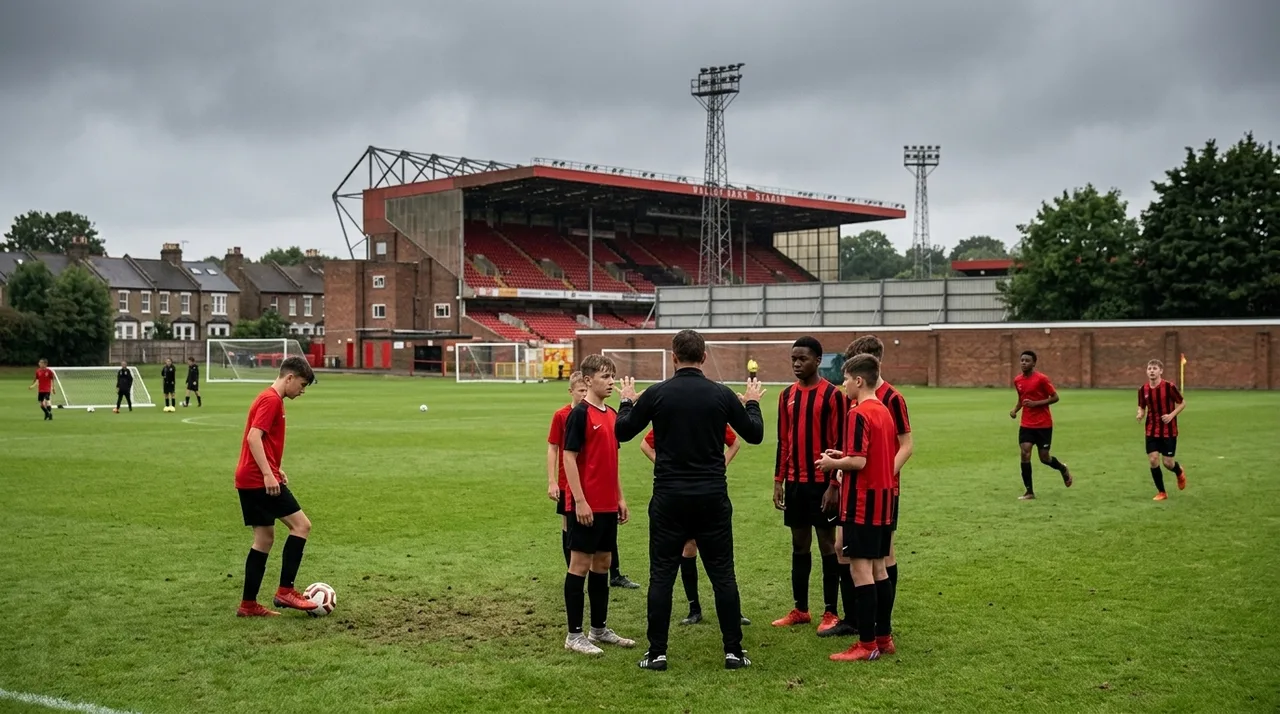
Charlton Athletic's Lead Under-21s Coach Chris Lock has given a candid insight into the work being done behind the scenes at the club to develop young players, describing the programme as "a massive thing that we're really proud of" in a recent interview with BBC Radio London's Nick Godwin.
The case for investing in youth
For Championship clubs operating without the financial firepower of Premier League sides, a well-run academy and development structure is not a luxury but a necessity. Every player who steps from the under-21s into the first-team squad represents a cost saving, certainly, but also something harder to quantify: proof that the club's football identity is being built from the ground up rather than assembled in a transfer window.
Charlton have a genuine history of producing their own players, and Lock's comments suggest the club regard that tradition as something worth defending and developing rather than simply talking about. That matters in a division where squads are routinely reshuffled between seasons, and where a settled core of homegrown players can provide continuity when the summer market inevitably disrupts things.
What development actually means at this level
It is worth being precise about what under-21 football in the Championship pyramid asks of coaches like Lock. The players in his group are not simply marking time until they are old enough for the first team. Many will be training alongside senior professionals day to day, and some will be sent out on loan to lower-division clubs to experience competitive football at a level that development matches cannot replicate.
The pipeline, then, is not a straight line. Lock's role is to prepare players for a range of outcomes: first-team involvement at Charlton, loan spells that test them in senior football, or, in some cases, moves to other clubs where they are more likely to play regularly. The measure of a good development programme is not just how many players it produces for its own first team but how many it produces for professional football, full stop.
We do not have the detailed numbers from this interview to say precisely how many Charlton academy graduates have gone on to play senior football in recent seasons. What Lock's tone does suggest is that the staff view the current cohort with genuine optimism.
Why this matters for the first team now
Charlton's first team, under manager Michael Appleton's predecessor and into the current campaign, has had a stop-start season so far. Results have been inconsistent, as the recent 4-0 defeat at Stoke illustrated, and the squad has needed freshening at various points. In that context, a functioning under-21 pathway gives the manager options he might not otherwise have, particularly when the injury list lengthens or when the January transfer window is not yet open.
The value of having Lock and his staff speak publicly about their work, too, should not be understated. For young players weighing up where to sign their first professional contracts, a club that visibly invests in development and celebrates it publicly sends a clear signal. Recruitment at youth level is competitive, and reputation counts.
Pride, pressure and the next step
Lock's phrase, "a massive thing that we're really proud of," is notable in its directness. Pride in development work can sometimes mask a lack of results; equally, it can reflect genuine achievement that external observers have not yet caught up with. Without more detail from the interview, it would be unfair to adjudicate between those two possibilities.
What is clear is that Charlton view their under-21 set-up as a source of real identity, not merely a box to tick. In a Championship where financial sustainability is increasingly scrutinised and where clubs must prove they are run responsibly, that kind of structural investment in young players carries weight beyond the training pitch. The question, as always at this level, is whether the pipeline produces players who can handle the step up when the first team calls.
Frequently asked
- Does Charlton Athletic have a good youth academy?
- Charlton have a long tradition of producing homegrown players and their Lead U21s Coach Chris Lock has spoken publicly about being proud of the club's player development programme, suggesting the current setup is viewed positively within the club.
- Who is Charlton Athletic's Under-21s coach?
- Chris Lock is Charlton Athletic's Lead Under-21s Coach. He recently spoke to BBC Radio London about the club's approach to player development.
- How do Charlton Athletic develop young players for the first team?
- Charlton use a combination of regular under-21 training and matches alongside the senior squad, as well as loan moves to lower-division clubs, to prepare young players for first-team Championship football.