
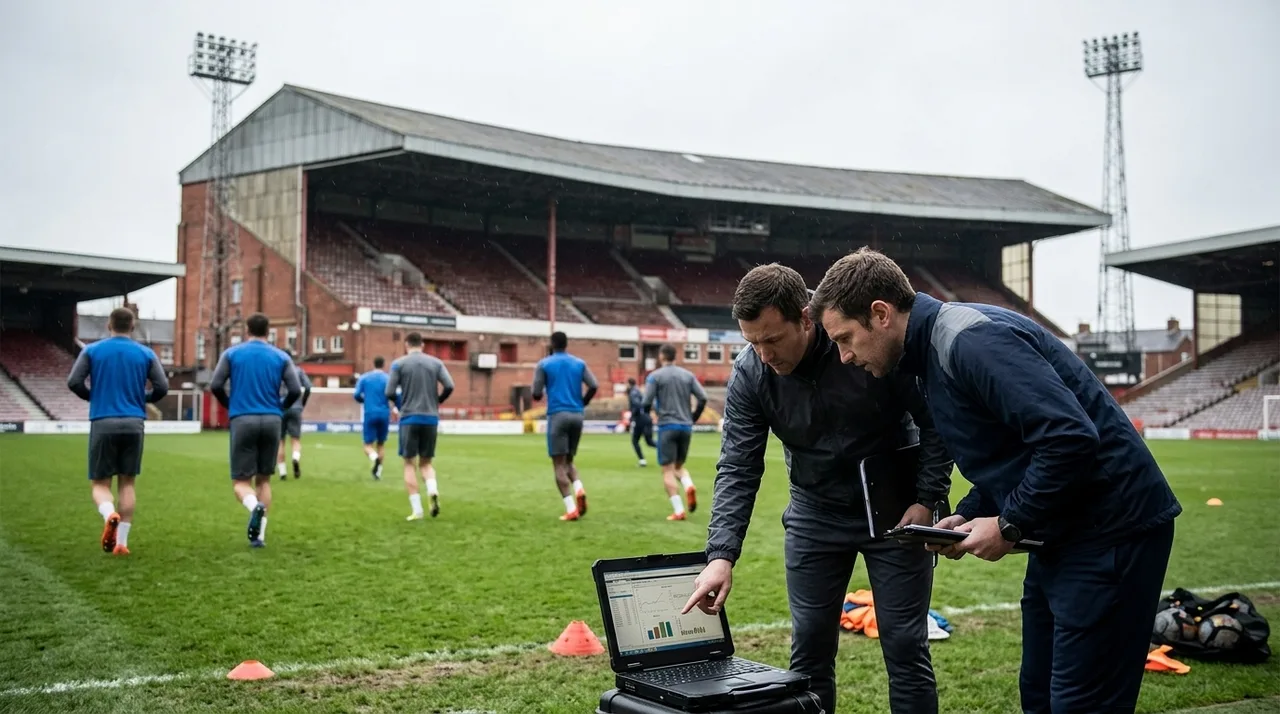
Every Championship club lives and dies by the fitness of its squad. For Lincoln City, the pressure on the backroom staff has been felt acutely this season following the loss of captain Tendayi Darikwa to a serious knee injury barely two months into the campaign. Now, head of medical Kieran Walker and head of performance Josh Snowden have spoken publicly about how the Imps keep their players fit, and what recovery looks like for the skipper.
Darikwa's ACL: where things stand
Walker confirmed that Darikwa suffered an anterior cruciate ligament injury in late August, a blow which ended the defender's season almost before it had begun. The captain has since undergone surgery and, according to Walker, is now in the early weeks of recovery at home.
An ACL repair typically demands at least nine months of structured rehabilitation before a player is considered for a return to competitive football. That timeline alone tells you Darikwa will not feature again this term. What matters now is the quality of the work done in those recovery weeks, and Walker's comments suggest the medical team are closely involved even during the home-based phase of rehab.
Losing your captain to an injury of that severity is a significant setback for any Championship side. The role Darikwa played as a leader and an experienced head in the dressing room is not easily replicated, and Lincoln's staff will need to manage the psychological as well as the physical side of his return.
The performance side of a Championship operation
Snowden, meanwhile, spoke about the broader demands of keeping a squad in peak condition across the relentless schedule of a Championship season. It is worth spelling out what that actually means: clubs at this level play 46 league fixtures alone, often with midweek rounds stacked around weekend games. The margins between a squad that stays fit and one that deteriorates through accumulated fatigue can, genuinely, decide whether a club finishes in the top six or the bottom half.
The relationship between a performance team and the players is built on data, but it is also built on trust. Load-monitoring tools, GPS tracking and recovery metrics all feed into daily decisions about training intensity, but those numbers only translate into results on the pitch if the players buy into the process. That buy-in starts with credibility, and it sounds as though both Walker and Snowden are eager to explain their methods rather than simply impose them.
Why transparency matters at this level
It is relatively unusual for Championship clubs to open up this particular door. Medical and performance departments tend to operate quietly, away from cameras, partly out of professional caution and partly because their work is difficult to reduce to a quick headline. Walker and Snowden sitting down with BBC Radio Lincolnshire is a small but deliberate act of communication with the club's fanbase.
For supporters who have watched Darikwa limp out of a match and then waited weeks for any meaningful update, that transparency carries real value. It does not change the prognosis, but it treats fans as adults who can understand that recovery is a process rather than a switch that gets flipped.
What it means for Lincoln's season
Lincoln have been navigating this campaign without their captain, and the squad has had to adapt. The medical and performance team's ability to keep the rest of the group available and sharp is arguably more important now than it would be in a fully healthy squad. We do not have the numbers to say definitively how Lincoln's injury record compares to their Championship rivals this season, but the public-facing work Walker and Snowden are doing suggests a department that is confident in its methods and willing to be held to account by the people who care most about the club's fortunes.
The long-term picture for Darikwa, and for Lincoln's hopes of having a fit and experienced squad ready for the second half of the season, depends on the unglamorous, painstaking work these two men and their colleagues carry out every day. They have at least started talking about it.
Frequently asked
- When will Tendayi Darikwa return from his ACL injury?
- Darikwa suffered an anterior cruciate ligament injury in late August and has since had surgery. ACL recoveries typically take at least nine months, meaning he is unlikely to feature again for Lincoln City this season.
- Who is in charge of Lincoln City's medical and performance team?
- Kieran Walker serves as Lincoln City's head of medical, while Josh Snowden is the club's head of performance. Both spoke to BBC Radio Lincolnshire about their work with the squad.
- How does Lincoln City manage player fitness during the Championship season?
- According to Josh Snowden, the performance team uses load-monitoring and recovery data to manage player workloads across the demanding 46-game Championship schedule, working closely alongside the medical department.