
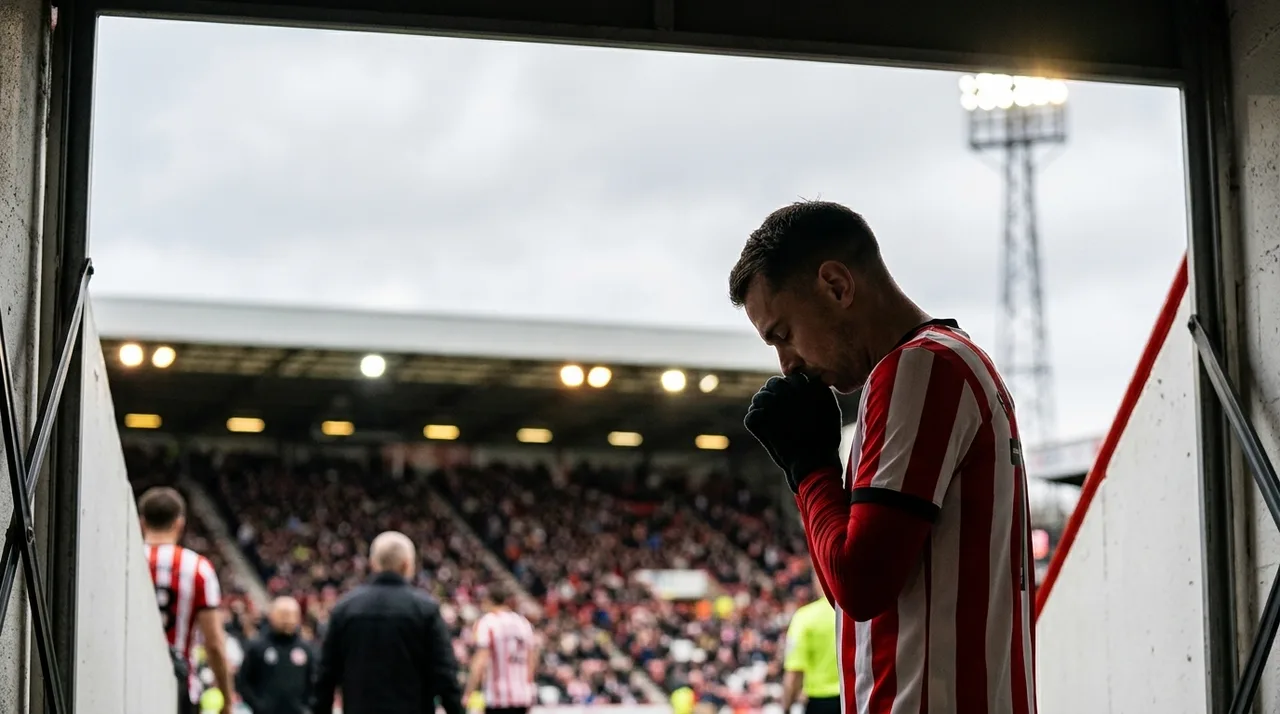
Southampton manager Tonda Eckert has revealed that Taylor Harwood-Bellis was left out of the club's 3-1 Championship victory over Stoke City because the defender was not in the right mental state to play. It is a significant disclosure, and one that deserves to be handled carefully.
What the manager said
Speaking to BBC Radio Solent, Eckert was direct: Taylor, in his words, "wasn't in the right headspace." He offered no further detail beyond that, which is entirely appropriate. The manager's willingness to address the absence openly, rather than reach for the usual "tactical decision" or "minor knock" cover, is worth noting.
Harwood-Bellis has been one of Southampton's most prominent players in recent seasons, and his name has featured prominently in transfer speculation this summer. The club rejected an £18 million bid for the centre-back earlier in the window, a decision that underlines how important he is to Eckert's plans. Whether the pressures that come with that kind of attention played any role in his absence is not something the manager addressed, and it would be wrong to speculate.
The bigger picture at Southampton
The 3-1 win over Stoke was, on the face of it, the result Southampton needed. It was their first Championship victory of the season, arriving after an opening defeat to Watford that had raised early concerns about how the club would adjust to life back in the second tier. Three points from the next two available would look considerably healthier on the table.
However, one win does not paper over the questions that remain. A four-game purple patch can flatter to deceive at this level, and Eckert will know better than anyone that the Championship punishes inconsistency without mercy. Southampton are a squad expected to challenge for an immediate return to the Premier League, and the standards of performance will be judged over 46 games, not one.
Winning without Harwood-Bellis does carry a silver lining in terms of squad depth: it demonstrates that the team can function in the absence of a key player. But the club will want him back fit and available as quickly as possible. A centre-back of his quality is not easily replaced, particularly mid-season when the transfer window is shut.
A note on mental health in football
Eckert's candour on the subject reflects a broader shift in how clubs communicate about player welfare. There is still a tendency in football to treat mental wellbeing as something to be quietly managed rather than openly acknowledged. Managers who choose transparency over deflection do the game a service, and their players one too. It signals to supporters that the person matters as much as the footballer.
There is no timeline on Harwood-Bellis's return, and none should be guessed at. The priority is the player, not the fixture list. That said, Southampton will be mindful that the Championship schedule does not pause: fixtures come in rapid succession, and every absence creates a problem to be solved.
What to watch
For Southampton, the key questions in the coming weeks are straightforward. Can they sustain the form that produced the Stoke result without one of their most reliable defenders? How the backline performs in Harwood-Bellis's absence will tell supporters a great deal about the squad's true depth. Eckert will be expected to manage the situation carefully, and on this evidence, he appears minded to do exactly that.
Frequently asked
- Why did Taylor Harwood-Bellis miss Southampton's win over Stoke?
- Southampton manager Tonda Eckert explained that Harwood-Bellis was absent because he was not in the right headspace, citing the defender's mental state rather than any physical injury.
- Is Taylor Harwood-Bellis injured?
- There is no indication of a physical injury. The Southampton manager described the absence as a mental wellbeing issue, with no timeline given for the player's return.
- How did Southampton get on without Harwood-Bellis against Stoke?
- Southampton won 3-1, which was their first Championship victory of the 2026-27 season, suggesting the squad coped in the defender's absence.