
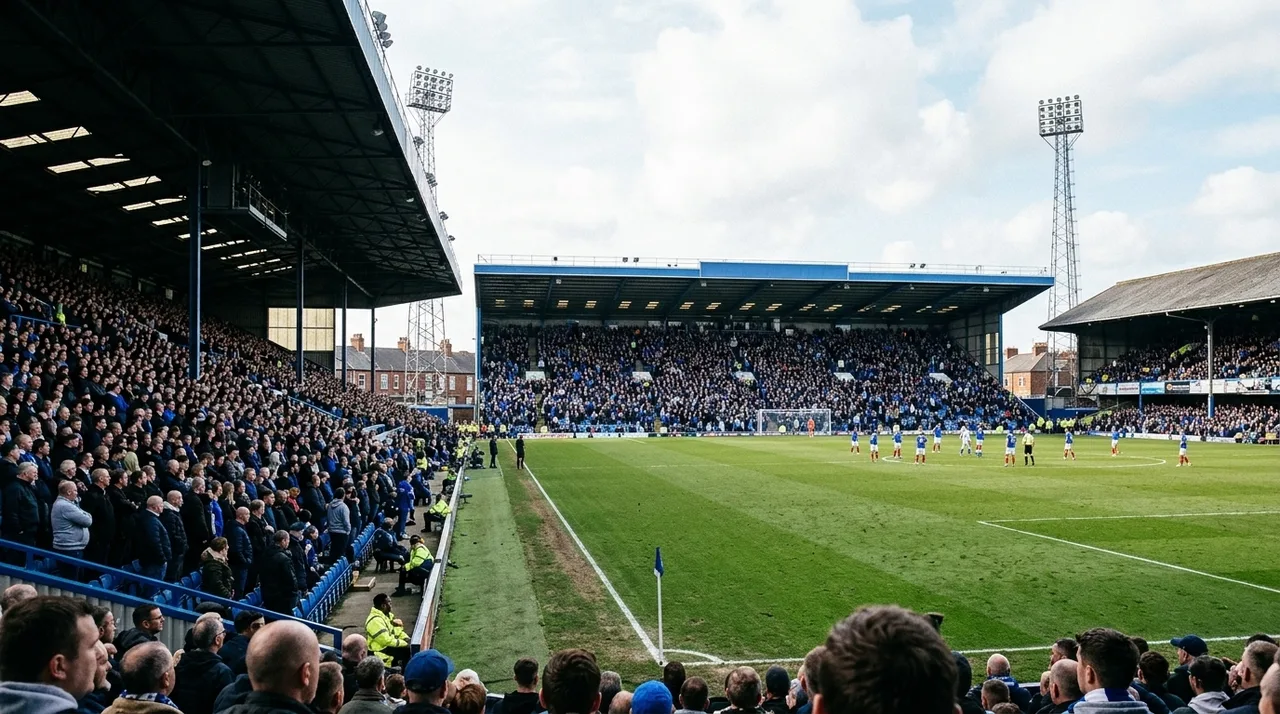
Luke Varney has spoken candidly about his short stint at Portsmouth, telling Radio Solent's Ian Wilding that leaving the club felt premature and that the move away from Fratton Park left him with a genuine sense of regret.
A season cut short by administration
Varney joined Portsmouth on a season-long deal from Blackpool, and by his own admission things were going well enough that he hoped to remain at the club beyond that initial arrangement. The circumstances, however, were entirely out of his hands. Portsmouth entered administration during his time there, and the financial upheaval that followed forced the sale of players across the squad. Varney was among those moved on, heading to Leeds United as the club scrambled to meet its obligations.
"It was sad to leave so early," Varney told the programme, and that single line carries rather more weight than it might at first appear. This was not a player chasing a bigger contract or a more glamorous project. By his own account, he wanted to stay. The administration that robbed him of that choice remains one of the darkest chapters in Portsmouth's history, a period that saw a club that had won the FA Cup in 2008 spiral through multiple ownership crises and successive relegations.
What it tells us about that era at Pompey
Varney's recollection is a useful reminder of how the collapse of Portsmouth's finances damaged not just the club's league standing but the individual careers of players who found themselves caught in the wreckage. The striker arrived at a club in genuine difficulty and did not have the chance to contribute to any kind of recovery before the economics of administration intervened.
It is worth being clear about what we do not know from this interview: we have no detailed account of Varney's specific performances during that spell, no figures for goals or appearances, and no direct comparison with how the squad around him was performing. The seven-minute Radio Solent conversation offers a personal reflection rather than a statistical record. That is not a criticism; it is simply an honest account of what the source actually gives us.
What it does confirm, in broad terms, is that the administration period fractured relationships that might otherwise have developed into something more sustained. Varney is one of several players from that era who have since spoken warmly about Fratton Park, which suggests the dressing room culture and the connection with supporters left an impression even amid the chaos off the pitch.
Portsmouth today
Portsmouth are now a Championship club, working to establish themselves in the second tier after years of rebuilding from that nadir. The distance between then and now is significant: from administration and non-league football to competing in the second tier of English football is a considerable journey, and one the club's supporters will not take for granted.
Varney's interview is a small but resonant footnote to that story. It is a reminder that administrations are not abstract financial events; they interrupt careers, sever connections, and leave players with a lasting sense of what might have been. The fact that a former striker still reflects on his departure with obvious feeling, years later, says something about what Portsmouth meant to those who passed through during even its most turbulent period.
The Radio Solent interview is available on BBC Sounds for those who want to hear the full conversation with Ian Wilding.
Frequently asked
- Who is Luke Varney and when did he play for Portsmouth?
- Luke Varney is a former striker who joined Portsmouth on a season-long loan from Blackpool. He was sold to Leeds United after Portsmouth entered administration, cutting his time at Fratton Park short.
- Why did Luke Varney leave Portsmouth so quickly?
- Varney's departure was driven by Portsmouth's financial crisis. When the club entered administration, players were sold to help meet financial obligations, and Varney was among those moved on to Leeds United.
- What division are Portsmouth in now?
- Portsmouth are currently in the Championship, the second tier of English football, having rebuilt the club following the administration crisis that saw them drop as far as non-league football.