
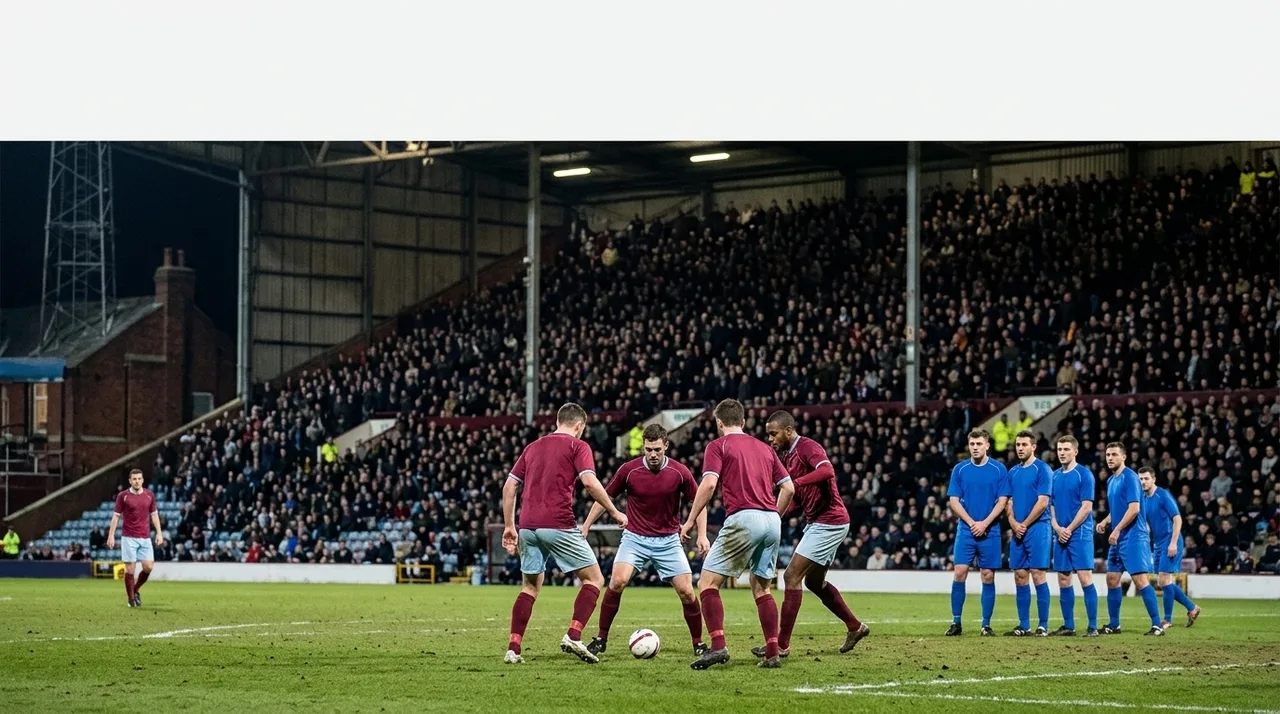
There is a particular kind of frustration that comes from watching your side control a match and still lose it. West Ham United supporters know that feeling well this season, and the numbers from the Charlton Athletic home defeat laid it out in uncomfortable detail.
The stats that flatter, and the result that does not
West Ham held 77.6% of the ball against Charlton and registered 43 touches inside the opposition box, 25 shots and nine on target. A missed penalty was thrown in for good measure. On paper, that reads like dominant, pressure-filled football. The scoreline, a 2-1 defeat, tells a different story entirely.
Fan writer Holly Turbutt, writing for BBC Sport, identified the core issue clearly: too many of those 665 passes were played safe. The ball moved in a U-shape between the defenders, round and round, with very little movement off the ball to give any of those passes a meaningful destination. Charlton, well-organised and compact, simply did not need to do much. West Ham were doing the hard work for them.
It is worth being precise about what the data can and cannot tell us here. Possession percentage and box touches are surface-level figures. They tell us where the ball was, not how dangerous it was when it got there. We do not have the underlying numbers, such as expected goals from open play or pass-progression rates, to say with certainty how much of that territory was genuinely threatening. What we do have is the testimony of fans in the ground, and by all accounts the build-up play lacked urgency and invention, particularly in the first 70 minutes.
A structural problem, not just a bad day
Turbutt is careful to note that this is not a new complaint. West Ham, across several seasons, have been more comfortable playing on the break than building patiently through a low block. That style served them adequately when they were facing stronger opposition who pushed forward and left space in behind. In the Championship, the situation is often reversed: West Ham will be the team with the ball, and the team they are facing will sit in and defend.
That shift in dynamic is significant, and the departure of Mateus Fernandes has sharpened the problem. Fernandes was a player willing to carry the ball forward and commit defenders; without someone performing that function, West Ham's build-up risks becoming circular. Creativity and the willingness to drive at opponents are not things you can simply legislate into existence through tactical instruction alone. They require personnel, and the early evidence is that the squad as currently assembled is short in that area.
Head coach Nuno Espirito Santo will be aware of the criticism. His sides have, historically, been better known for their defensive organisation and counter-attacking threat than for elaborate positional play. Whether he can adapt those instincts to the demands of Championship football, where his team will routinely carry the greater attacking burden, is the central question of West Ham's season.
The Championship does not forgive wastefulness
The second tier is unforgiving in a specific way: most teams here are well-drilled and physically competitive. A side that dominates possession without converting it into goals will keep conceding points to organised, lower-block opponents, which is precisely what has happened. Two goals conceded against Charlton also underlined that the defensive shape needs attention; it is not only an attacking problem.
There is genuine reason for measured optimism. The season is long, the squad has quality, and the statistics at least confirm that West Ham are getting themselves into areas from which goals should come. The problem is the final product. If Nuno can identify the right blend of patience in possession and directness in the final third, the underlying volume of chances suggests the results will follow.
Right now, though, West Ham are producing the shape of dominance without the substance of it, and in this division, that gap gets punished quickly.
Frequently asked
- Why did West Ham lose to Charlton despite having so much possession?
- According to fan analysis, West Ham played too many safe, sideways passes and lacked movement off the ball. Despite 77.6% possession and 25 shots, including a missed penalty, the side failed to break down Charlton's defensive shape effectively.
- How is West Ham coping with life in the Championship?
- West Ham have struggled early in the Championship season. Results such as the 2-1 home loss to Charlton and a 2-2 collapse at Turf Moor suggest the club are finding it difficult to convert territorial dominance into wins, with creativity and urgency in attack identified as key weaknesses.
- What has been the impact of Mateus Fernandes leaving West Ham?
- Fernandes was seen as a player who could carry the ball forward and break defensive lines. Since his departure, fans and observers have noted a lack of forward drive in West Ham's build-up play, particularly when the team is in possession against a low defensive block.